
Quick Answer: No, you cannot use a Debt Service Coverage Ratio or DSCR loan for a primary residence. DSCR loans are business-purpose loans for investment properties that produce rental income, and lenders make you certify at closing that you won't live there. To buy a home you'll live in, use a conventional, FHA, VA, USDA, or bank statement loan.
Introduction
A DSCR loan for primary residence use sounds like the perfect shortcut if you're self-employed. The loan never asks for your tax returns, and returns that show a small number after write-offs are what usually sinks an application from self-employed borrowers. For the home you live in, though, a DSCR loan is off the table. What you can get instead is a loan that solves the same paperwork problem legally, and for most buyers it costs less.
What is a DSCR loan?
DSCR stands for debt service coverage ratio, and these loans are built for real estate investors who want to buy rental properties. Instead of looking at your personal income or your W-2s and tax returns, DSCR lenders focus on the property's cash flow, meaning the property's ability to pay for the loan out of its rental income.
How the debt service coverage ratio works
The calculation is actually pretty simple:
DSCR = Monthly Rent ÷ Monthly Payment (Principal + Interest + Taxes + Insurance + HOA)
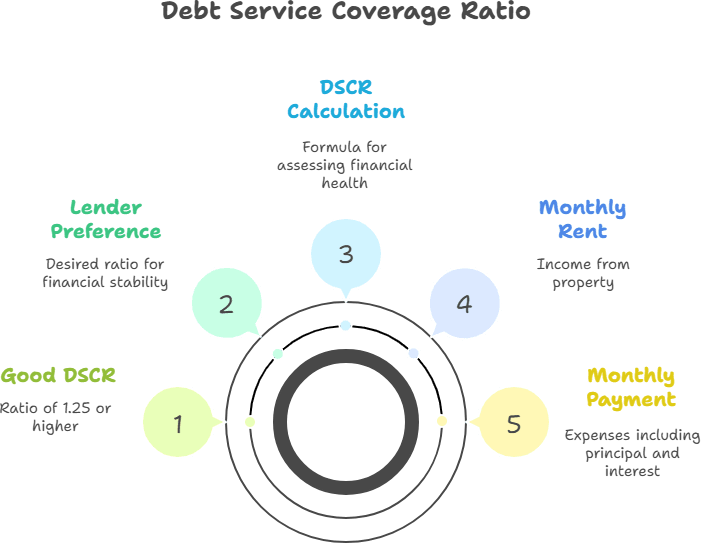
Most lenders want to see at least 1.0, which means the rent covers the payment. But they really prefer 1.25 or higher, which gives you some breathing room for vacancies and repairs.
Let's say you've got a property that brings in $2,500 a month in rent, and your total payment is $2,000. That gives you a DSCR of 1.25, which is what most lenders call a "good" ratio.
The rent figure comes from the appraiser's market rent schedule (Fannie Mae Form 1007 on a single-family home) or from the lease if the subject property already has a tenant. Some lenders run the test yearly, dividing gross rental income by annual debt service, and get the same answer.
How DSCR loans work for investors
These are what's called non-qualified mortgage (non-QM) products: private lenders make them, Fannie Mae and Freddie Mac don't buy them, and they skip conventional underwriting. Instead of digging through your pay stubs and personal tax returns, lenders care about one thing: can this property pay for itself? That lets investors keep growing a real estate portfolio after their tax returns stop supporting another conventional mortgage.
The trade-off is price. DSCR loans usually carry higher interest rates than conventional loans and bigger down payments, and most lenders hit you with prepayment penalties if you pay off early.
Typical DSCR loan requirements
Most DSCR lenders set requirements in these ranges (from 2026 lender guidelines):
- Minimum credit score of 640 to 660
- Down payment of 20% to 25% on most programs, with a few allowing 15%
- A non-owner-occupied investment property, confirmed by a signed certification
- Minimum loan amounts of $75,000 to $100,000
- Reserves of 3 to 12 months of payments, depending on loan size
- A prepayment penalty on most loans, such as a 5-4-3-2-1 step-down or a flat 5%
Why you can't use a DSCR loan for your primary residence
It is simply not possible to purchase a property you plan to live in with a DSCR loan. Period. This isn't some gray area or loophole situation. It's how this type of loan legally works.
The legal side of things
DSCR lending falls under what's called "business purpose" lending. Regulation Z, the federal rule behind the Truth in Lending Act, exempts credit made primarily for a business purpose, and its official commentary treats a loan on a rental the owner won't live in as business-purpose credit. That exemption is why a DSCR lender can skip the ability-to-repay rules and your personal income documentation. Live in the house and it becomes a consumer loan, which a DSCR lender isn't set up to make.
Why the math doesn't work
The whole point of a DSCR loan is that rent from the property pays the mortgage. If you're living in the house, there's no rent coming in, so the calculation falls apart. Primary residences just don't generate rental income the way lenders need to see it. Renting out a spare room doesn't rescue it either, because lenders write these loans only for properties where the owner doesn't live.
What DSCR lenders make you sign
Lenders spell out in the loan documents that these loans are for investment properties only. At closing you sign a business-purpose and occupancy certification stating you won't live in the property, and some versions have you acknowledge that consumer protections like TILA and RESPA disclosures may not apply. EPM Wholesale's DSCR affidavit, for example, has you promise not to occupy the property or claim it as a primary or second home for as long as the loan is outstanding. Read that loan agreement carefully, because a false statement in it is a default.
Ready to take the next step on your home loan?
See custom rates and loan scenarios tailored to your budget in minutes. No hard credit pull, zero obligation.
DSCR loan for primary residence rules: what counts as living there?
Living in one unit and renting the others
Not with a DSCR loan. Living in any unit makes the property your primary residence, and so does living in an ADU out back or renting rooms in the house you live in. Federal rules technically treat buying a 3-4 unit building you'll live in as business-purpose credit, but DSCR guidelines still bar the borrower from living there.
This is house hacking, and it has its own financing that beats a DSCR loan on price. Fannie Mae and Freddie Mac now allow 5% down on an owner-occupied 2-4 unit purchase, FHA and VA loans work too, and lenders can count 75% of the rent from the other units toward your qualifying income. Expect limits if you've never been a landlord; our guide to FNMA rental income walks through them.
Letting a family member live there
DSCR guidelines commonly bar family members from living there too. Plaza Home Mortgage's DSCR guide, for one, rules out occupancy by the borrower or a family member. If your adult child is the one moving in, they can buy with an FHA loan and you can sign as a non-occupant co-borrower.
Using it as a vacation home or staying at your short-term rental
DSCR loans work well for short-term rentals, but hosting guests is different from staying there yourself. Under the federal commentary that defines business-purpose rental property, a place the owner expects to occupy for more than 14 days in the coming year counts as owner-occupied. Its own example is a beach house the owner uses for a month each summer. None of the DSCR lender guides we read allowed any personal-use days. If you want a lake house you'll use every summer, finance it as a second home.
Buying now and moving in later
Not while the DSCR loan is in place. Buying with a plan to move in after the lease ends is an occupancy misstatement on day one, and some DSCR affidavits bar owner occupancy for the life of the loan anyway. If your plans change for real, say a job move or a divorce, talk to your lender first and refinance into owner-occupied financing, which requires you to move in within 60 days of closing.
Putting the property in an LLC
Plenty of DSCR loans close in an LLC, and federal lending rules treat credit to an entity as business credit. An LLC doesn't change who lives in the house, though. The occupancy rule follows the property, not the name on the deed.
What happens if you try it anyway?
Look, I get it. You might be thinking "what if I just don't tell them?" or "who's gonna know?" Trust me, that's a road you don't want to go down, because we're talking about potential criminal charges here.
The legal trouble you're looking at
Lying about occupancy to get a DSCR loan is mortgage fraud. Under federal law, a false statement to a mortgage lending business, which includes private DSCR lenders, can land you in prison for up to 30 years and cost you up to $1 million in fines. Federal prosecutors don't mess around with this stuff.
A lender that catches it during the loan process will deny the file, and it can be reported to FinCEN in a suspicious activity report. Find it after closing, and the loan documents let the lender demand the entire balance right now, not over 30 years. Can't pay it? Hello foreclosure.
Financial penalties and long-term credit impact
Paying the loan off to make the problem go away still costs you, since most DSCR loans charge a prepayment penalty of up to 5% of the loan balance in the early years. A foreclosure stays on your credit report for seven years, and Fannie Mae makes most borrowers wait seven years after one before they can get a conventional loan again. The financial consequences outlast the house.
Better ways to finance your primary residence
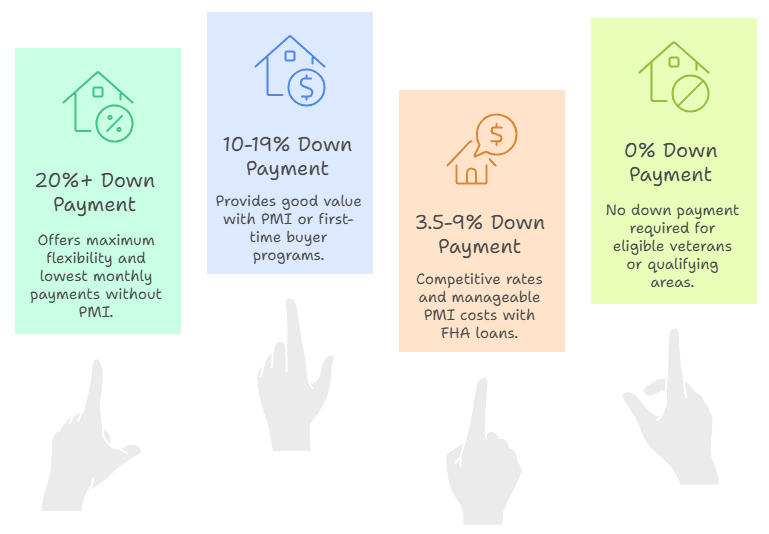
STX Lending has plenty of options for buying your primary residence, and most of them are better deals than DSCR loans anyway.
| Loan | Minimum down payment | Qualifies on | Can you live there? |
|---|---|---|---|
| DSCR loan | 20% to 25% (15% at a few lenders) | The property's rental income | No |
| Conventional loan | 3% on one unit, 5% on 2-4 units | Your income, credit score, and debt-to-income ratio | Yes |
| FHA loan | 3.5% at 580+, 10% at 500 to 579 | Your income and credit | Yes, required |
| VA loan | 0% | Your income and residual income | Yes, required |
| USDA loan | 0% | Household income under the area limit | Yes, required |
| Bank statement loan | About 10% to 25% | 12 or 24 months of bank deposits | Yes |
| Asset depletion loan | About 15% to 20% | Liquid assets | Yes |
Conventional financing: still the best deal for most people
Regular conventional mortgages are popular for a reason. They usually beat DSCR loans on rate, carry no prepayment penalty, and let you drop private mortgage insurance once you hit 20% equity. First-time buyers can put 3% down, and so can buyers whose income fits HomeReady or Home Possible.
Every percentage point on a $300,000 loan moves the payment by roughly $200 a month. The price of admission is full personal income documentation: recent pay stubs and W-2s, plus usually two years of tax returns.
FHA loans: great for first-time buyers
If you don't have a huge down payment saved up, FHA loans might be your best bet. Because the Federal Housing Administration insures them, lenders can go as low as 3.5% down, which on a $350,000 house is $12,250. A DSCR loan would need almost six times that.
The other cool thing about FHA loans? They're assumable, so if interest rates go up later and you want to sell, the buyer can take over your loan at your current rate.
VA loans for eligible veterans and military personnel
VA loans offer zero down payment and no private mortgage insurance, and the funding fee can be rolled into the loan amount. On a $300,000 home, that's the difference between bringing nothing and bringing $60,000 to $75,000 for a DSCR loan. VA loans also work on homes with up to four units, as long as you live in one of them.
USDA rural development loans for qualifying areas
USDA loans offer zero down payment to eligible borrowers buying a primary residence, with household income generally capped at 115% of the area median. Eligibility goes by address and covers plenty of small towns and outer suburbs, so check the USDA map before assuming you're too close to a city.
Bank statement loans for self-employed borrowers
This is the loan most self-employed buyers asking about DSCR actually need. Bank statement loans qualify you on 12 or 24 months of bank deposits instead of the taxable income on your returns, and they're specifically designed for primary residences. Expect a rate somewhat above conventional and a down payment that shrinks as your credit score climbs.
Asset depletion loans for retirees and business owners
Borrowers with substantial liquid assets but irregular income can qualify for asset-based loans, often called asset depletion loans. These programs turn savings and investments into qualifying income, which makes them a fit for anyone with more in the bank than on a pay stub. Plan on at least 15% to 20% down.
If you're self-employed and not sure which of these fits, send us 12 months of bank statements or your last two tax returns and we'll tell you which program prices better for your file. Call (210) 750-6164 to get started.
Frequently asked questions about DSCR loans and primary residences
No. A conventional loan is any mortgage not insured or guaranteed by the federal government, and most follow Fannie Mae and Freddie Mac guidelines that qualify you on personal income and debt-to-income ratio. A DSCR loan is a non-QM loan that qualifies on property cash flow instead. You can refinance a DSCR loan into a conventional loan later if you qualify on your own income.
Every borrower's situation is unique. The guidelines above are general — speak with a licensed loan officer to understand how they apply to you specifically.
Ready to Get Started?
STX Lending is a Texas-owned direct lender with decades of combined experience. Whether you're buying your first home or refinancing for better terms, our team is here to help.
Ready to take the next step on your home loan?
Apply online for expert-recommended options customized to your budget.
Get started