In many cases, yes. If your lender allows it and you still qualify based on the loan amount and your finances, you may be able to include some or all of your closing costs in the mortgage instead of paying them upfront. The downside is that since those costs become part of your loan balance, you'll pay interest on them over time. That means you'll spend more overall compared to paying them at closing. For some buyers, keeping cash in the bank is worth it. For others, paying upfront saves money in the long run.
Introduction
In many cases, yes. If your lender allows it and you still qualify based on the loan amount and your finances, you may be able to include some or all of your closing costs in the mortgage instead of paying them upfront. The downside is that since those costs become part of your loan balance, you'll pay interest on them over time. That means you'll spend more overall compared to paying them at closing. For some buyers, keeping cash in the bank is worth it. For others, paying upfront saves money in the long run.
What Are Mortgage Closing Costs?
Closing costs are the expenses that come with finalizing your home loan. They include lender fees, title charges, appraisal costs, recording fees, attorney fees where required, and other services needed to complete the purchase. These costs cover everything necessary to transfer ownership of the home and fund your mortgage.
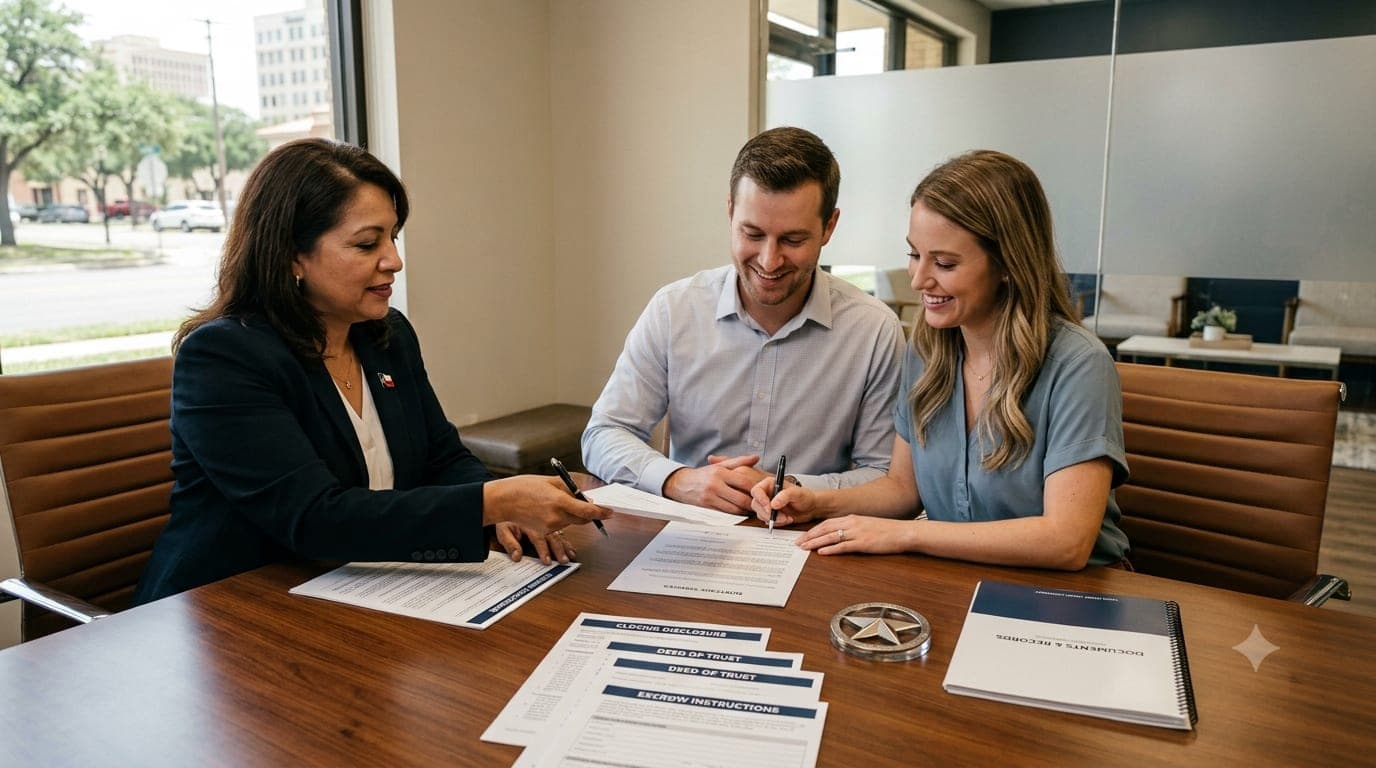
Some of the fees come directly from your lender, while others are charged by outside companies like the title company, appraiser, or your local county recording office. As your lender, we will give you a Loan Estimate within 3 business days after you apply. Before closing, you'll receive a Closing Disclosure showing the final costs. Not every fee can be added to your loan, so it's important to know which ones qualify.
How Much Are Closing Costs on a Home Loan?
Most buyers can expect closing costs to fall somewhere between 2% and 5% of the homes purchase price. For a $300,000 home in Texas, that's usually around $6,000 to $15,000
The amount you'll pay depends on several factors, including your loan program, down payment, interest rate, and the area where you're buying. Texas doesn't charge a state transfer tax, which helps keep costs lower. However, property taxes and homeowners' insurance are often collected upfront, making closing costs a little higher than the national average. Our complete Texas closing costs guide breaks down the typical line items, with the state average sitting near $4,548 for a standard purchase.
Which Closing Costs Can Be Rolled Into Your Mortgage Loan?
These are the closing costs you can typically roll into the loan balance, if your lender allows it:
- Loan origination fee - this covers the lenders work involved in reviewing, processing, and underwriting your mortgage. It's usually around 0.5% to 1% of the loan amount and is one of the fees most commonly rolled into the mortgage.
- Appraisal fee - typically $300-$1,000 for the lender's required property valuation.
- Credit report fee - what the lender charges to pull your credit report.
- Home inspection fees - usually $250-$700.
- Title fees and title insurance - protects you and the lender against ownership disputes.
- Attorney fees - legal costs incurred during the home buying process.
- Recording fees - local government cost to record the new deed and mortgage.
- Discount points - upfront payment to lower your interest rate (one point equals 1% of the loan amount).
- Mortgage insurance premiums - FHA loans allow the upfront MIP to be financed into the loan balance.
- VA funding fee - VA loans allow this single closing cost to be rolled in.
These are the fees charged for creating your mortgage and are listed under the "Loan Costs" section of your Closing Disclosures. The fees are related to getting the loan itself, not owning the home.
Which Costs Can't Be Rolled In (Including Your Down Payment)
Many costs that can't be financed are considered prepaids. These aren't lender fees but they're money collected in advance and placed into your escrow account so those bills can be paid when they're due:
- Property taxes - your lender will typically collect several months upfront.
- Homeowners insurance - usually a full year's premium paid at closing.
- Prepaid mortgage interest - interest that accrues between the closing date and your first mortgage payment.
- Escrow fees - funds to establish your escrow account.
- HOA fees - homeowners association dues required at or before closing.
For a deeper breakdown of these items, see our prepaid costs explainer.
Can You Roll the Down Payment Into Your Mortgage?
No. Your down payment is separate from your closing costs and cannot be rolled into your mortgage. The down payment is the amount you contribute toward buying the home. It reduces how much you borrow and affects your loan-to-value ratio. Some loan programs, such as FHA and VA loans, require little or no down payment. That's because of the loan program itself, not because the payment is financed.
Rolling Closing Costs Into the Loan by Mortgage Type
Each mortgage program has its own guidelines for financing closing costs into your loan.
Conventional Loans
With a conventional loan, you can often roll closing costs into the mortgage if the total loan amount still meets lending guidelines. You'll also need to stay within loan-to-value limits and meet your lenders debt-to-income requirements. If your LTV goes above 80%, private mortgage insurance may be required
FHA Loans and the Federal Housing Administration
FHA loans allow borrowers to finance the upfront mortgage insurance premium into the loan . Other closing costs may also be included if the loan still meets FHA guidelines. Most lenders require an LTV of 97% or less and a debt-to-income ratio under 43%, although some allow higher DTI limits
VA Loans
VA loans follow different rules. The VA funding fee is the only closing cost that can normally be added to the loan balance. Depending on your military service and disability status, you may not have to pay this fee at all. Other closing costs can't usually be financed, but sellers are often allowed to help pay them through seller concessions.
USDA Loans
USDA loans only allow closing costs to be financed when the homes appraised value is higher than the purchase price. If there's enough extra value, that difference can help cover closing costs. Most lenders also prefer a debt-to-income ratio around 41% or lower.
Jumbo Loans
Rules for jumbo loans vary from lender to lender. Most require a lower loan-to-value ratio, strong credit, and lower debt levels. Underwriting is generally more strict than with standard mortgage programs.
How Loan-to-Value Ratio Affects Rolling Closing Costs
Your loan-to-value ratio, or LTV, compares your loan amount to the homes value
When you add closing costs to the mortgage, your loan balance increases, which also raises your LTV. For example, if you buy a $300,000 home with a down payment of 10%, you will borrow $270,000 and that means its a 90% LTV. If you finance another $9,000 in closing costs, your loan increases to $279,000 so your LTV jumps to about 93%
A higher LTV could require mortgage insurance or even keep you from qualifying for the loan.
How Loan-to-Value Caps Can Disqualify You
Most loan programs have maximum LTV limits. Conventional loans typically stay at 80% without mortgage insurance. FHA loans allow up to 97%, while USDA and jumbo loans have their own requirements. If financing your closing costs pushes you over the limit, you will probably need to pay some costs out of pocket or bring a larger down payment.
How Rolling Closing Costs Changes Your Mortgage Interest Over Time
Rolling closing costs into your mortgage sounds convenient, but it costs more over time. Lets say you finance $10,000 in closing costs on a 30-year loan with a 7% interest rate. By the time the loan is paid off, you'll have paid about $13,900 in interest on that $10,000. That means those original fees end up costing nearly $24,000. Paying them upfront costs less overall but financing them lets you keep more cash available today.
Ready to take the next step on your home loan?
See custom rates and loan scenarios tailored to your budget in minutes. No hard credit pull, zero obligation.
Pros and Cons of Rolling Closing Costs Into Your Mortgage
Pros
- Lower upfront costs. That extra cash can help cover moving expenses, home repairs, furniture, or unexpected costs after you move in.
- Easier path to homeownership if a down payment plus closing costs would drain your savings.
- Room for a larger down payment - some buyers also prefer using their available cash towards a larger down payment, which may lower the monthly payment or eliminate private mortgage insurance.
Cons
- More mortgage interest paid over the life of the loan on the rolled-in amount.
- Monthly mortgage payments that are higher from the larger loan balance.
- Higher LTV and builds equity slower
- May affect loan approval if rolling costs in pushes your loan to value ratio or DTI past your lender's limit.
Lender Credit and No Closing Cost Mortgage: Trading an Interest Rate for Upfront Costs
If you decide to roll closing costs into the loan, just know, that is not the only way to reduce what you pay at closing.
How a Lender Credit Works
A lender credit helps you pay some of your closing costs in exchange for accepting a slightly higher interest rate. Instead of increasing your loan balance, the lender pays part of the costs upfront and recovers the money through the rate over time. Depending on the numbers, this may work out better than financing the costs directly
No Closing Cost Mortgage Explained
No closing cost mortgage does not mean that the costs disappear. They're usually covered by a lender credit or added to the loan balance. Either way, you will generally pay more over time through a higher interest rate or additional interest on the larger loan amount.
Seller Concessions and Wholesale Lender Options
As part of the purchase negotiation, a seller concession is when the seller agrees to cover part of your closing costs. This is common in slower market and often directed through your real estate agents. It is definitely something worth asking about with every offer.
STX Lending, and other wholesale lenders, dont build the same retail markup into their pricing as many banks. That often means lower rates and more flexibility when comparing options like paying closing costs upfront, financing them, or using lender credits.
How to Roll Closing Costs Into Your Mortgage Step by Step
- Speak to your lender first. Confirm that rolling closing costs is an option and find out which costs qualify.
- Run the numbers both ways. Ask your lender to show both scenarios side by side. Compare the monthly payment, total interest paid, loan amount, and cash needed at closing.
- Compare against a lender credit. Ask whether a slightly higher rate with no rolled-in costs results in a better total.
- Get approved for the higher loan amount. Underwriting will reconfirm you still meet LTV and DTI requirements.
- Review the closing disclosures carefully against your loan estimate to confirm the final loan amount and monthly payment match what you agreed to.
When Does Rolling Closing Costs Into Your Home Loan Make Sense?
Financing your closing costs may be a good option if you are trying to keep more cash available after closing or want to avoid draining your savings.
It can also make sense if paying the down payment and closing costs together would leave you with very little money in reserves. On the other hand, paying closing costs upfront is usually the better financial choice if you have the cash available and plan to stay in the home for many years.
Every buyers situation is different, so the right decision depends on your goals and finances.
STX Lending's Approach to Closing Costs in Texas
STX Lending is a Texas wholesale mortgage broker that offers access to wholesale interest rates without the added retail markup many banks charge. Whether you are paying your closing costs upfront, financing them, or using lender credits, we'll help you compare every option so you can choose what makes the most sense.
We also offer a 21-day fast closing guarantee. If we don't close your loan within 21 days, we will credit $1,000 toward your closing costs. Our team proudly serves homebuyers across San Antonio, Houston, Dallas, and communities throughout Texas.
If you're wanting to roll closing costs into your mortgage, we'll run the numbers both ways and walk you through the tradeoffs honestly.
Frequently Asked Questions
Yes. Many refinance loans let you include closing costs in the new loan balance. Since you are replacing your current mortgage, this is one of the most common times borrowers choose to finance those costs instead of paying them out of pocket.
Get a Wholesale Mortgage Rate From STX Lending
Wondering whether financing your closing costs is the right move? We'll show you the numbers both ways so you can see the difference before making a decision. With wholesale mortgage rates, pre underwritten approvals, and our 21 Day Closing Guarantee, we are here to make the process simple. Give us a call at (210)-750-6164 or apply online to get started.
Equal Housing Lender.
Every borrower's situation is unique. The guidelines above are general — speak with a licensed loan officer to understand how they apply to you specifically.
Ready to Get Started?
STX Lending is a Texas-owned direct lender with decades of combined experience. Whether you're buying your first home or refinancing for better terms, our team is here to help.
Ready to take the next step on your home loan?
Apply online for expert-recommended options customized to your budget.
Get started