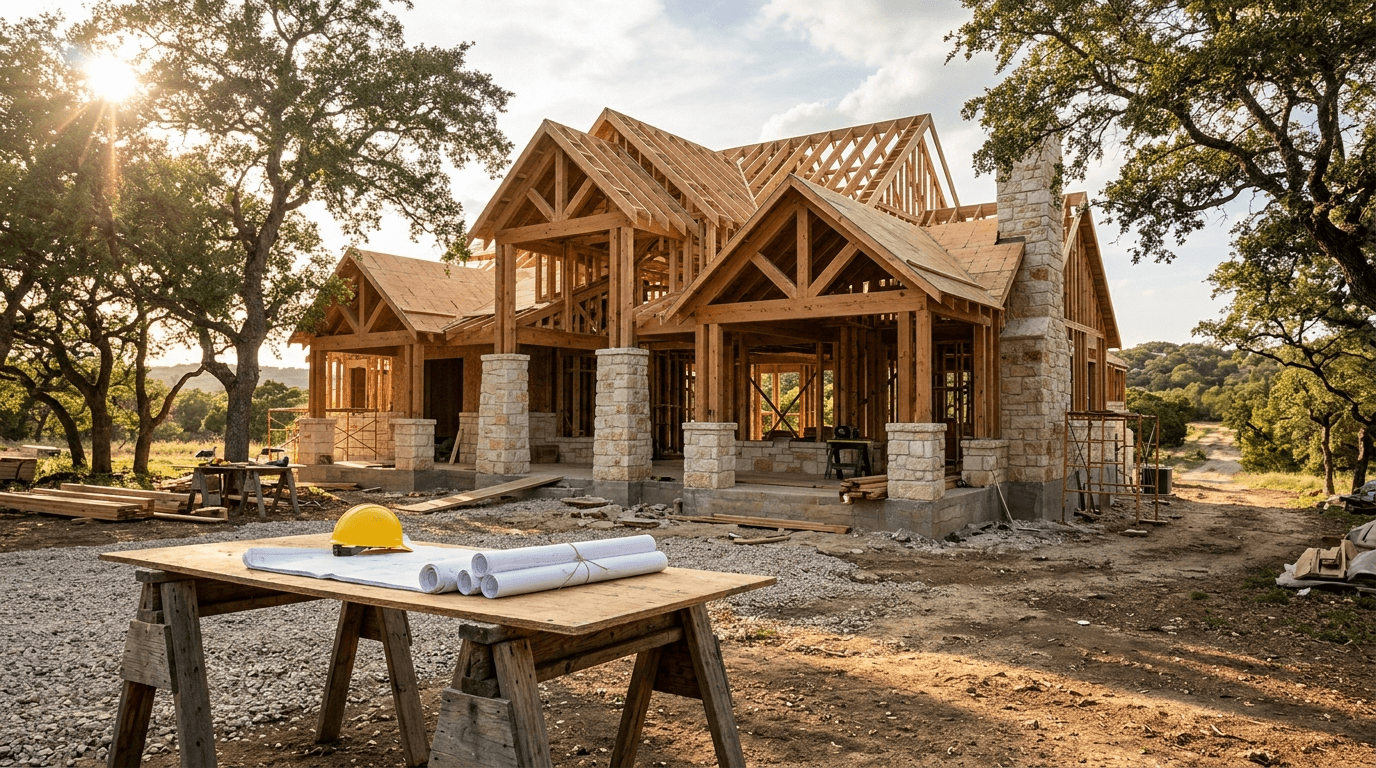
Quick Answer: First, you must check to see if you can build on the land. Once that is determined, put aside 10% of your projected budget for the work on the site while you find a builder and construction loan. As the work is being done, the loan pays the builder, then changes to a mortgage loan when you move in. If you have paid off the land, it will usually count toward the down payment.
Introduction
Can you build a house on land you own?
Usually, you can build on land you own. But just having a deed does not make the land buildable. There are two questions you must answer: Are you allowed to build there? And can you afford to build there within the budget? Here is how to answer:
- Zoning and deeds. In zoning, the city decides where you can build on the lot. But the deed restrictions might limit you on the minimum square footage and what roof material you can use.
- Easements and road access. You are not able to build on a certain spot if the utility or access easement runs through the area you picked for the home. Look into legal access from a public road or a recorded easement over a neighbor's driveway you have used in the past.
- Flood zone. Look your parcel up on FEMA's flood maps. A flood zone doesn't always stop a build, but it can mean a raised foundation and a bigger insurance bill.
- Septic and water. Without a sewer line, you'll need a septic system the soil can handle, which a perc test shows. Without public water, you'll need a well.
- Power and utility access. The farther the nearest line, the more you pay to bring service to the house.
- Title and ownership. A lender for a construction loan will only lend to whose name is on title. When the deed is in a parent's name, LLC, or trust, it will have to be changed to have your name on the deed before the lender can close.
How to build a house on your own land, step by step
Step 1: Check the land
Work through the checks above with your deed and a current survey in hand, and call the county or city permit office to ask what it takes to get a building permit on your parcel. Get the site work priced separately from the house, since that's the number that varies most from one piece of land to the next.
Step 2: Talk to a construction lender before you pick a plan
Find out what your land counts for and what you can borrow before you fall in love with a floor plan. A construction lender can tell you which loans fit and how much cash you'd need at closing, and our guide on how to get a construction loan covers requirements, draws and interest rates.
Step 3: Choose from home builders who build on private land
When choosing a builder, make sure they will build on your land instead of only in their own neighborhoods. You will also need to know if site work is billed on the side or in the builder's contract. If you are doing an FHA loan, the builder will need to be a licensed general contractor. Before you close on the loan, the lender will review the builder.
Step 4: Pick a floor plan that fits the site
You first want to walk the land with the builder before you select a floor plan. This site visit is important to look at the slope, setbacks, where the septic field will go, and where you add the driveway. Sometimes these can rule out certain plans or stock homes. Your final plans, specs, and site cost will make up the contract the lender and the appraiser will work off of.
Step 5: Get the appraisal and close
The lender will order the appraisal based off the projected value from your plans. Closing pays off any lot lien and then sets up a draw account, which starts from that day on the secured loan.
Step 6: Move through the construction process
Once work starts, your builder gets paid in stages, each one after an inspection, and when the house is finished the loan rolls into your permanent mortgage. Plan on most of a year. Contractor-built homes took an average of 10.5 months in 2025, per the Census Bureau, and Fannie Mae won't let a single construction period run past 12 months or the whole build past 18.
Ready to start your home buying journey?
See custom rates and loan scenarios tailored to your budget in minutes. No hard credit pull, zero obligation.
How much does it cost to build a house on your own land?
On a $350,000 project budget, set aside roughly 10%, or $35,000, for site preparation costs. You can use this money to get the land ready to build a house, with clearing, grading the driveway, utility hookups, and if you are out in the country, a well and septic system set up.
Some sites run past that. A long driveway, heavy tree cover, rock under the foundation, a utility line a quarter mile away or a septic design the soil forces on you can each push the number up, which is why the site checks come first.
For the house itself, the National Association of Home Builders' 2024 cost survey put average construction costs at $428,215, or roughly $162 a square foot by our math. NAHB calls it a small sample from its own builders, so use it as a starting point, not a builder's bid.
Owning the land takes out the other big line. In that same survey, a finished lot ran $91,057. Leave room for closing costs, a contingency line in the budget and interest during the construction phase, and our mortgage calculator shows the payment you'll live with once the loan converts.
How to get a loan to build a house on your land
A construction loan pays for the build, and the land you own works in your favor. Fannie Mae's construction FAQs spell out the setup: a borrower who already owns the lot can use a single-closing loan, handled as a limited cash-out refinance, to build on it. At STX Lending, we count paid-off land toward loan-to-value on any construction loan we do, whether it's owner-occupied, construction-to-permanent, a one-time close or a commercial spec build.
How land equity affects your down payment
Land equity lowers the cash you bring, not what the house costs. Your builder still gets paid in real money, so you'll normally borrow the whole build. The land shows up on the other side of the math, where the lender adds it to the build cost to get a finished value and measures your loan against that.
Here's a $350,000 build four different ways, assuming the finished home appraises at exactly land plus build, before closing costs:
| Your land is worth | You owe on it | Loan needed | Finished value | Loan-to-value | Cash due if the lender caps at 80% | Cash due if the lender caps at 95% |
|---|---|---|---|---|---|---|
| $100,000 | $0 | $350,000 | $450,000 | 77.8% | $0 | $0 |
| $100,000 | $30,000 | $380,000 | $450,000 | 84.4% | $20,000 | $0 |
| $40,000 | $0 | $350,000 | $390,000 | 89.7% | $38,000 | $0 |
| $200,000 | $0 | $350,000 | $550,000 | 63.6% | $0 | $0 |
Any land equity construction loan calculator runs this same math: multiply the finished value by the lender's cap, and whatever your loan needs above that number is your cash at closing.
Which column applies depends on the loan program. A bank's construction-only loan often wants about 20% equity, while a conventional one-time close can go higher on Fannie Mae's Eligibility Matrix, usually with mortgage insurance above 80%. FHA requires a 3.5% minimum investment, and HUD says land equity can satisfy that down payment requirement. VA and USDA don't require a down payment from eligible borrowers, so there the land mostly means you aren't borrowing to buy it.
What if your land is worth more than the required down payment?
You don't get the difference back in cash. Look at the $200,000 row: that extra equity lowers your loan-to-value, which can save you mortgage insurance, but on a Fannie Mae single-closing loan there's no cash-out option. Pulling money from the land takes a two-closing loan and at least six months of title before the permanent closing. A limited cash-out refinance can still roll in your closing costs and points, and that's usually the best use of the surplus.
What if you still owe money on the land?
The loan can pay it off. Plenty of builder sites say land has to be free and clear, but the rules are looser than that. Fannie Mae's single-closing rules let the proceeds pay off existing lot liens, and VA's regulation allows a loan to refinance what's owed from buying the land being built on. The balance just gets added to your loan amount, so $30,000 owed on the land in the table above costs you $30,000 of credit.
Your lender will ask you for the payoff statement from the person or lender who holds the lot loan. That lien will be paid off at closing so the new loan can go in its place.
How lenders value your land
Usually at today's appraised value, not what you paid, though the rules differ. FHA uses the appraised value if you've owned the land more than six months or received it as an acceptable gift, and the lower of cost or appraised value if you've owned it six months or less. A conventional single-close loan on a lot you already hold title to measures against the "as completed" appraised value of the lot and house together.
That's why the table's assumption matters. If that first project appraises $20,000 low and your lender caps at 80%, you bring $6,000.
Can you use land as collateral for a construction loan?
Yes, and that's how the loan structure is built. Once it closes, your land and the house going up on it secure the loan together, so if you stop paying, you could lose both. Lenders that accept land as collateral for a build include banks, credit unions, Farm Credit lenders and mortgage lenders that do construction-to-permanent loans.
Should you take out a land equity loan first?
Usually not, if you plan to build soon. A land equity loan is a separate loan against land you own, and its balance has to be paid off when your construction loan closes, so it eats the credit your land would have given you. Borrow $50,000 against that $100,000 lot, and at an 80% cap you'd owe $40,000 at closing instead of nothing. We don't offer land equity loans or cash-out on land at STX Lending; we'd rather put your land's value to work inside the construction loan.
Build on your land in Texas: three rules to know
Three Texas rules change the steps above. If the land is your homestead, Property Code 53.254 makes a lien for the work valid only with a written contract, signed before any labor or materials. Both spouses have to sign if you're married, and the contract gets filed with the county clerk.
Land with an agricultural valuation can bring a surprise tax bill. Under Tax Code 23.55, changing the use triggers an additional tax for the three prior years, and a lien attaches on the date of the change. It applies only to the part of the parcel you convert, so carving out five acres for a house doesn't roll back the whole tract. Ask the appraisal district for that number before you commit to a site, and see what your bill looks like after with the Texas property tax calculator.
Being outside the city limits gives you a little more room to work with. In most Texas counties there is no general power to zone; however, deed restrictions, floodplain rules, and septic permits still apply.
Frequently asked questions
Yes, usually. The land's equity counts toward what the lender requires, and using land can cover all of it when you own the lot outright and it's worth enough. Any balance you owe comes out of the credit.
Every borrower's situation is unique. The guidelines above are general, so speak with a licensed loan officer about how they apply to you.
Ready to start your home buying journey?
Tell us your budget and a licensed loan officer will show you the options that fit it.
Get started